 Pin it
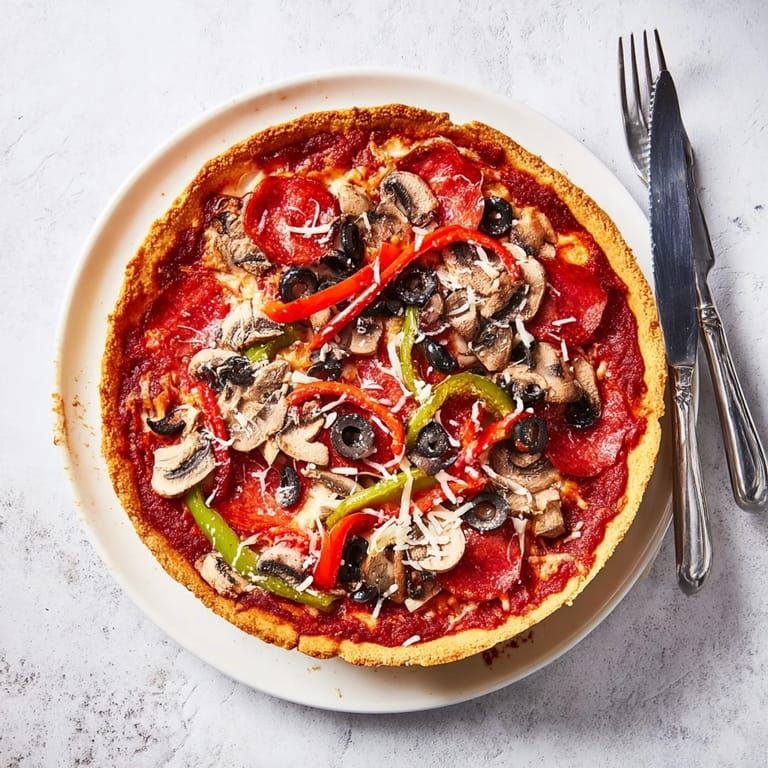
 The first time I attempted deep dish pizza, I accidentally used a cake pan instead of a proper pizza pan because that's what my grandmother always had handy. My husband watched skeptically as I piled cheese halfway up the sides, convinced I was making a savory lasagna instead of pizza. When that golden crust emerged from the oven, bubbling with sauce and cheese, the whole house smelled like a Chicago pizzeria. We've never ordered delivery since.
My college roommate from Chicago used to talk about deep dish pizza like it was a religious experience, and I honestly thought she was exaggerating until I visited her hometown. We stood in line for two hours at Giordano's, and when that first steaming slice hit the table, I finally understood what all the fuss was about. Now making it at home has become our winter tradition, the kind of meal that demands sweatpants and a good movie afterward.
Ingredients
- All-purpose flour: The foundation that gives structure to that thick, satisfying crust we love
- Yellow cornmeal: This is the secret ingredient that creates that signature crunch and authentic Chicago texture
- Active dry yeast: Make sure your water is warm but not hot, or you will kill the yeast before it can work its magic
- Olive oil and melted butter: This combination creates an incredibly rich, flavorful crust that browns beautifully
- Shredded mozzarella cheese: Go for the full-fat version here because this pizza needs all that cheesy goodness to hold its own against the hearty sauce
- Crushed tomatoes: The chunky texture creates that perfect rustic sauce that every great deep dish requires
Tired of Takeout? 🥡
Get 10 meals you can make faster than delivery arrives. Seriously.
One email. No spam. Unsubscribe anytime.
Instructions
- Wake up the yeast:
- Combine warm water with yeast in your largest bowl and watch for that beautiful foamy layer that tells you it is alive and ready to work
- Build the dough foundation:
- Mix in flour, cornmeal, salt, olive oil, and melted butter until everything comes together, then knead until the dough feels smooth and elastic under your hands
- Let it rise patiently:
- Place the dough in a greased bowl, cover it, and walk away for an hour while it transforms into something twice its original size
- Simmer the sauce:
- Sauté garlic in olive oil until fragrant, then add crushed tomatoes with oregano, basil, and sugar, letting everything bubble away for twenty minutes
- Shape the masterpiece:
- Press that risen dough into your oiled pan, working it up the sides to create those tall edges that make deep dish so distinctive
- Layer like a pro:
- Sprinkle mozzarella first, then add your toppings in an even layer before finishing with that glorious sauce and a dusting of Parmesan
- Bake until golden:
- Slide the pan into a 425°F oven for 35 to 40 minutes, watching for that perfect golden crust and bubbling sauce
- The hardest part:
- Let the pizza rest for ten minutes before slicing, or you will have a delicious mess on your hands instead of neat, picture-perfect pieces
 Pin it
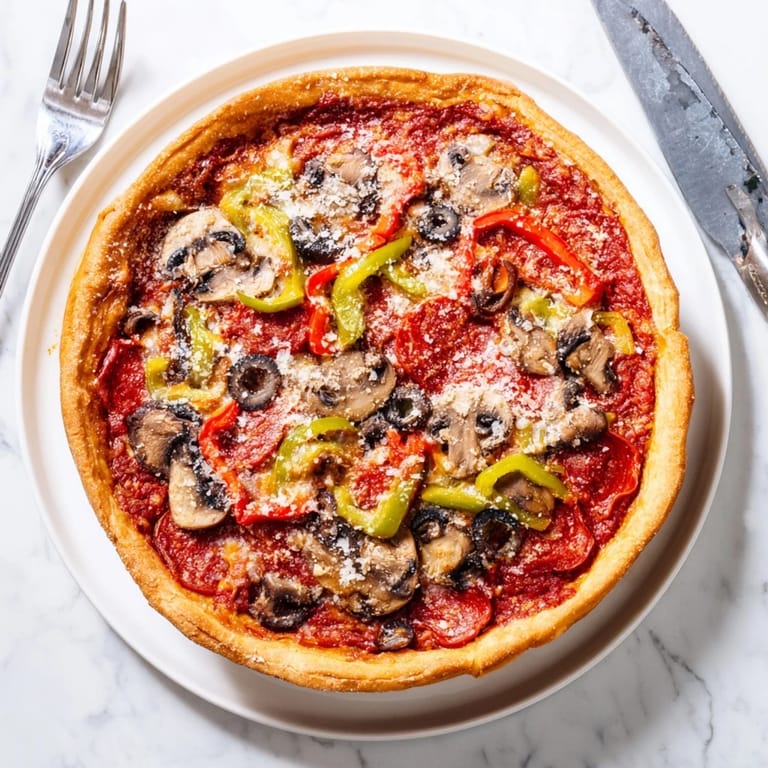
 Last winter, my daughter requested this for her birthday instead of a cake, and honestly, it might become our new family tradition. There is something so satisfying about watching people gather around the table, grabbing forks and diving into something so hearty and comforting. Pizza night has never felt more special.
Choosing The Right Pan
I have made this in everything from proper deep dish pans to cast iron skillets, and honestly, they all work beautifully as long as the sides are at least two inches high. The darker your pan, the faster your crust will brown, so keep an eye on things during that final bake time.
Making It Ahead
The dough actually develops better flavor if you make it the night before and let it rise slowly in the refrigerator. Just bring it to room temperature for about thirty minutes before you start shaping, and you will notice a noticeably more complex, delicious crust.
Perfecting Your Technique
After years of making this recipe, I have learned that pressing the dough up the sides with your fingertips works better than a rolling pin. The gentle pressure creates that rustic, handmade look that tastes even better than it looks.
- Use the back of a spoon to spread the sauce evenly without disturbing your toppings
- If your crust browns too quickly, tent the edges with foil for the last ten minutes
- A pizza wheel works great, but a sharp knife gives you those clean restaurant style slices
 Pin it
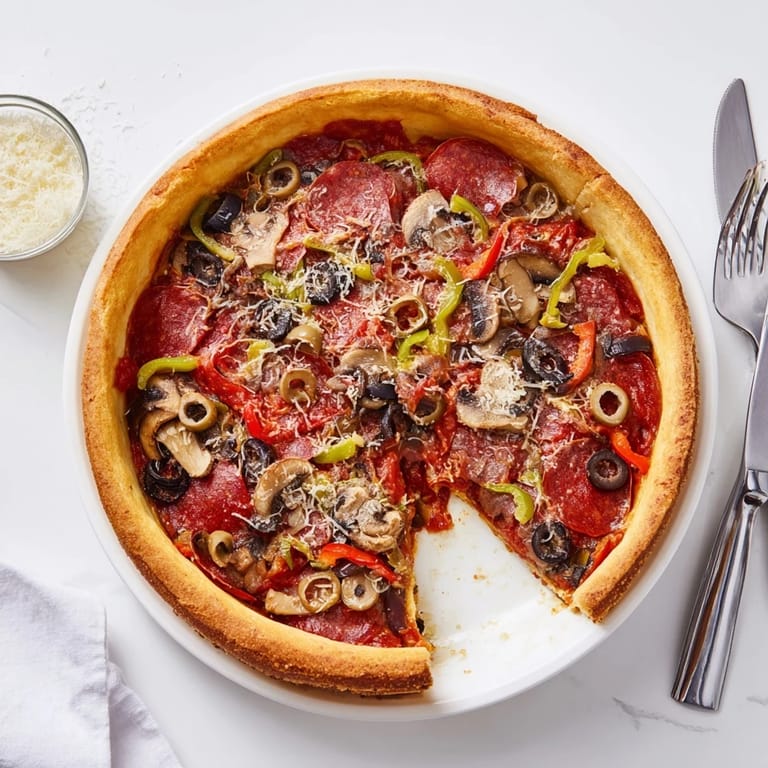
 There is nothing quite like pulling a steaming deep dish pizza from the oven and watching everyone's eyes light up. Enjoy every messy, delicious bite.
Recipe FAQs
- → What makes Chicago-style deep dish different from regular pizza?
Deep dish features a thick, buttery crust pressed up the sides of a pan to create a high edge. Unlike regular pizza where sauce goes on first, this style layers mozzarella directly on the dough, adds toppings, then finishes with chunky tomato sauce on top. The result is a hearty, knife-and-fork pie that takes longer to bake but delivers incredible depth of flavor.
- → Why is cornmeal added to the dough?
Cornmeal gives the crust its signature texture and slight crunch while adding subtle sweetness. It's a traditional component of authentic Chicago-style dough, creating that distinctive golden color and sturdy structure needed to support all those layers of cheese and toppings.
- → Can I shorten the dough rising time?
While you can use store-bought dough for convenience, making it from scratch yields the best results. The 1-hour rise is essential for developing flavor and creating that thick, bread-like texture. If you're pressed for time, try preparing the dough the night before and letting it rise slowly in the refrigerator—this actually enhances the taste.
- → Why does the sauce go on top?
This inverted layering technique protects the cheese from burning during the longer baking time required for the thick crust. The sauce insulates the cheese, allowing it to melt completely while the crust bakes through. It also keeps the toppings moist and prevents the bottom from getting soggy.
- → What type of pan works best?
A traditional 12-inch deep-dish pizza pan with high sides (2-3 inches) is ideal, but a round cake pan or even a cast-iron skillet works well too. The key is using something with high sides to contain all those generous layers. Grease it thoroughly with olive oil to ensure easy removal and a crispy, golden exterior crust.
- → How do I prevent the crust from burning?
If the edges brown too quickly, simply cover them with foil for the last 10-15 minutes of baking. The thick crust needs the full baking time to cook through, but the high edges are more exposed to heat. Keeping an eye on it during the final minutes helps achieve perfectly golden results without any burnt bits.