 Pin it
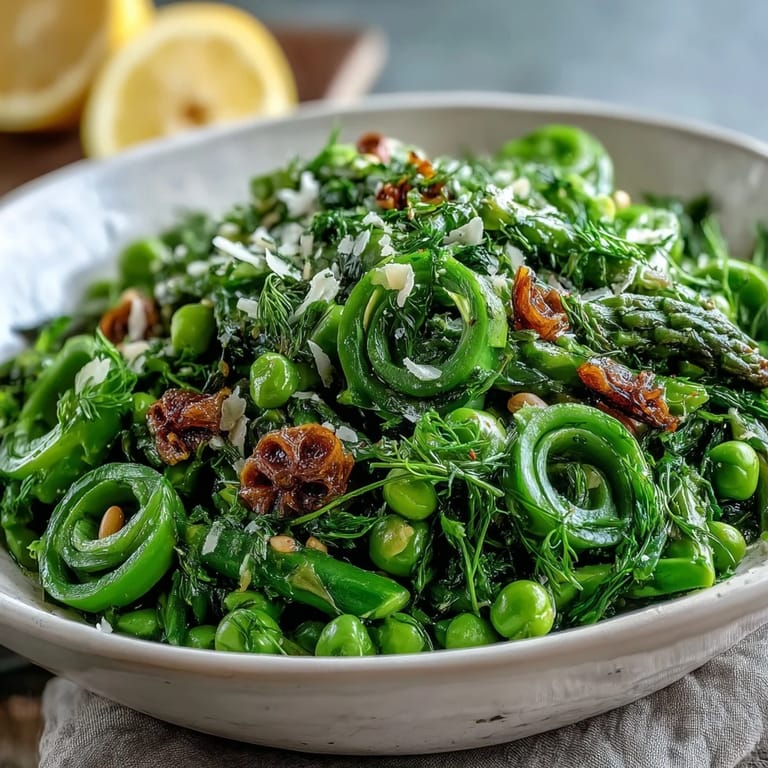
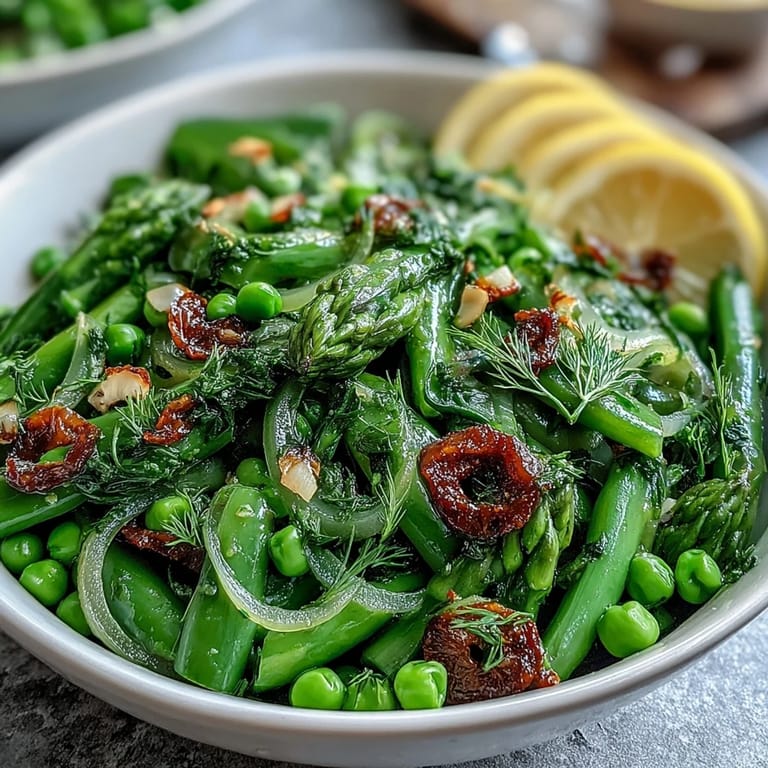
 There's a moment every spring when I open the farmers market bag and find those first tender asparagus spears, still dewy and impossibly green. My neighbor mentioned in passing that she shaves hers into ribbons instead of chopping them, and suddenly this salad became something I made almost weekly. The way those thin strands catch the light when you toss them with a bright lemon dressing feels like bottling up the season itself.
I made this for a potluck last June when everyone was bringing heavy casseroles, and it disappeared first. My friend Sarah asked for the recipe right there by the serving spoon, and I remember thinking how rare it is to see people genuinely excited about salad at a summer gathering. She made it the next week and added fresh mint from her garden, which I've done ever since.
Ingredients
- Fresh asparagus, about 1 bunch (300 g): Look for stalks that are bright green and firm, not soft or bendable. Trim the woody ends by snapping them where they naturally break, which saves you from waste and ensures you're only working with tender pieces.
- Green peas, 1 cup (150 g): Fresh peas in season are magical, but honestly, frozen ones work beautifully here and sometimes taste fresher than fresh. Just thaw them gently under cool water before using.
- Baby arugula or mixed spring greens, 2 cups (50 g): These delicate greens wilt slightly when dressed, which is exactly what you want—they become tender and absorb the lemon flavor rather than fight it.
- Radishes, 2 sliced thin: They provide a peppery crunch that keeps the salad from feeling too soft and mild. Slice them on a mandoline if you have one, or use your sharpest knife and take your time.
- Shaved Parmesan or pecorino, 1/4 cup (30 g): Use a vegetable peeler to create thin shards rather than grating it fine—you'll taste the cheese better this way, and it stays crisp longer once dressed.
- Toasted pine nuts or slivered almonds, 1/4 cup (30 g): Toasting them yourself in a dry pan for just a few minutes transforms them from bland to nutty and rich. Don't skip this step; it genuinely matters.
- Extra-virgin olive oil, 3 tbsp: This is where quality makes a real difference since there's nowhere for mediocre oil to hide in such a simple dressing.
- Freshly squeezed lemon juice, 2 tbsp: Bottled lemon juice tastes flat and thin by comparison—squeeze it fresh if you possibly can.
- Lemon zest, 1 tsp: The oils in the zest carry brightness that juice alone doesn't deliver, so don't skip it even though it's a small amount.
- Honey or maple syrup, 1 tsp: Just a touch to balance the tartness and help the mustard emulsify smoothly into the oil.
- Dijon mustard, 1 tsp: Acts as an emulsifier so the dressing stays unified rather than separating into oil and acid.
- Sea salt and freshly ground black pepper: Season as you taste rather than assuming these amounts are perfect for your palate—everyone's tolerance is different.
Tired of Takeout? 🥡
Get 10 meals you can make faster than delivery arrives. Seriously.
One email. No spam. Unsubscribe anytime.
Instructions
- Shave the asparagus with intention:
- Using a vegetable peeler, draw it along the length of each spear to create thin, ribbon-like strands. Work gently so they stay intact and don't tear. Toss the shavings into your large bowl as you go.
- Build the salad base:
- Add the thawed peas, tender greens, and thinly sliced radishes to the bowl with the asparagus. At this point it just looks like ingredients scattered together—don't worry, the dressing does the heavy lifting.
- Emulsify the dressing:
- In a small bowl or jar, combine the olive oil, fresh lemon juice, zest, honey, Dijon mustard, salt, and pepper. Whisk vigorously for about 30 seconds until it looks creamy and unified rather than separated. You'll feel it come together under the whisk.
- Dress and toss gently:
- Drizzle the dressing over the salad and toss with a light hand, making sure every piece gets coated without bruising the delicate greens. This takes less vigor than you'd think.
- Finish with texture and richness:
- Scatter the shaved Parmesan and toasted nuts over the top, or toss them in gently if you prefer everything well combined. Taste a forkful and adjust salt and lemon juice if needed—trust your mouth over the recipe.
- Serve right away:
- This salad is best enjoyed within minutes of dressing, while the asparagus is still crisp and the greens haven't begun to soften too much. If you must make it ahead, hold the dressing and greens separate until the last possible moment.
 Pin it
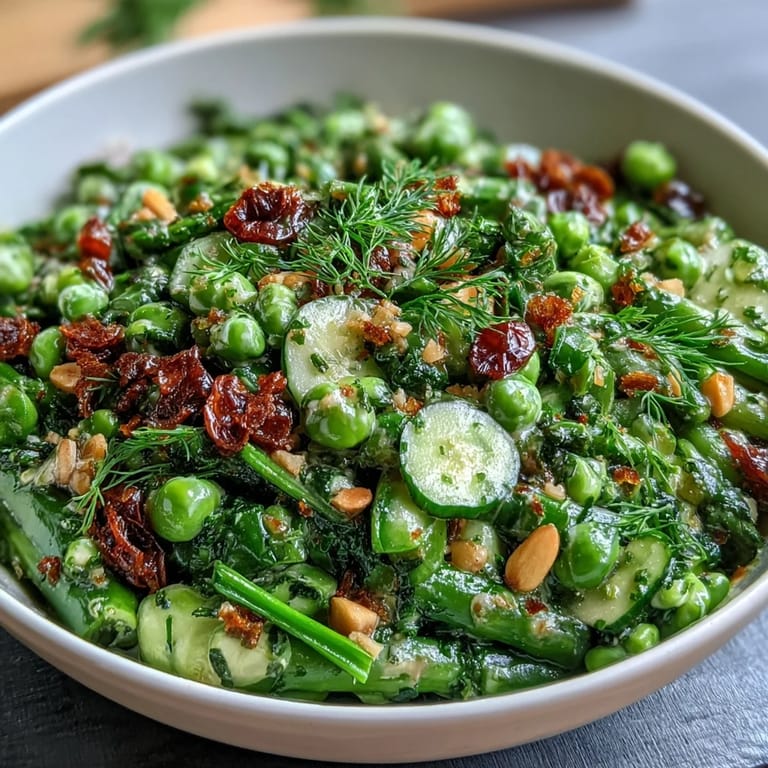
 I served this to someone who told me they'd never had a salad that made them feel full and satisfied, and something shifted in how I thought about feeding people. It proved that greens and vegetables don't have to be punishment or filler—they can be genuinely delicious when given a little care and attention.
Why Spring Vegetables Deserve Respect
Early season asparagus and peas are brief visitors, here for just a few weeks before summer's heavier produce takes over. Treating them simply—with just lemon, oil, and the right technique—honors what they already are rather than trying to transform them into something else. This salad taught me that restraint in a recipe is sometimes the most generous thing you can offer.
The Magic of Shaving
The vegetable peeler changed everything about how I approach asparagus. Instead of tough, chewy coins, you get delicate ribbons that cook themselves just from the warmth of being tossed with acidic dressing. It's one of those small technique discoveries that makes you wonder why nobody explained it to you sooner, and now you find yourself shaving asparagus into things that probably shouldn't have asparagus in them.
Variations and Moments of Improvisation
The beauty of this salad is how it bends to what's available and what sounds good to you. Last week I added fresh herbs from my kitchen window because I felt like it, and suddenly it was different and just as lovely. Once you understand how the components work together, you stop treating the recipe like a rulebook and start treating it like a conversation.
- Mint or basil scattered over the top transforms it into something almost herbaceous and summery without requiring any technique changes.
- A handful of crumbled goat cheese or creamy ricotta replaces the Parmesan if you want something softer and more indulgent.
- Sugar snap peas, blanched fava beans, or even shaved zucchini work beautifully if asparagus isn't in season or available where you are.
 Pin it
 This salad reminds me that the best meals often come from paying attention to what's good right now rather than chasing complicated techniques. Make it, taste it, share it—and notice how something so simple can become a favorite you return to again and again.
Recipe FAQs
- → How do you properly shave asparagus for this dish?
Use a vegetable peeler to slice the asparagus stalks lengthwise into thin, ribbon-like strips, which helps create a delicate texture and makes the asparagus easier to enjoy raw.
- → Can frozen peas be used instead of fresh ones?
Yes, thawed frozen peas work well and add a sweet, tender bite similar to fresh peas without affecting the salad's texture or flavor.
- → What makes the lemon dressing flavorful?
The dressing combines fresh lemon juice, zest, extra-virgin olive oil, honey or maple syrup, Dijon mustard, salt, and pepper for a bright, balanced, and slightly sweet citrus dressing.
- → Are there easy substitutions for the nuts and cheese?
For dietary preferences or allergies, omit the cheese or replace with plant-based alternatives, and swap pine nuts with slivered almonds or omit nuts entirely.
- → How should this salad be served for best freshness?
Serve immediately after tossing to maintain the crispness of the vegetables and the brightness of the dressing, ensuring optimal texture and flavor.
- → What herbs can enhance the flavor further?
Fresh mint or basil can be added to boost the salad’s aromatic qualities and add a refreshing twist to the overall flavor.