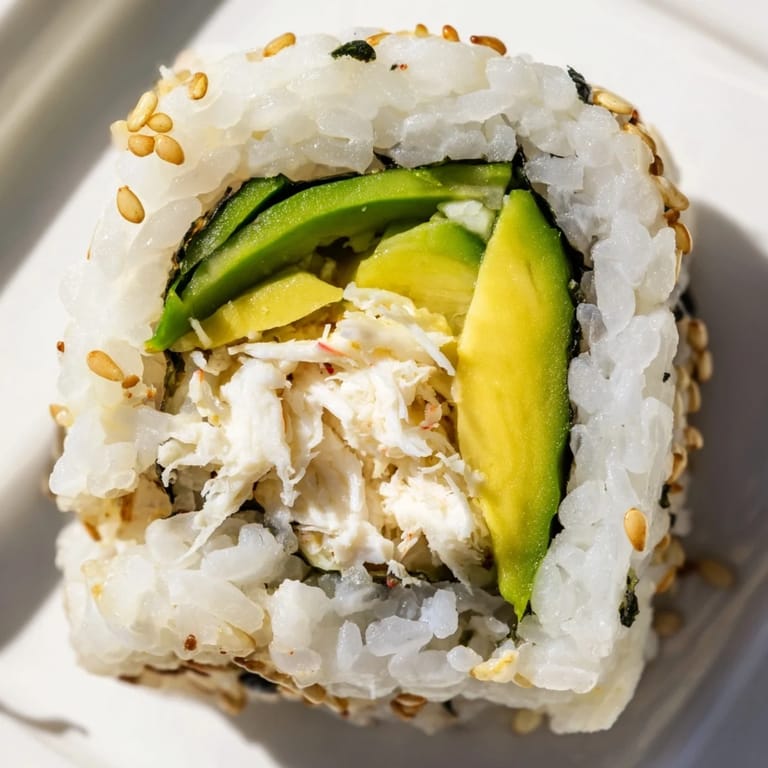
 Pin it
 The first time I attempted making California rolls at home, I was convinced it would be a disaster. My kitchen counter looked like a rice explosion, and I had somehow managed to get nori stuck to everything except the bamboo mat. But that first imperfect roll, with its slightly squiggly cucumber strips and rice that refused to spread evenly, still tasted like pure victory when I finally sat down to eat it.
My friend Sarah came over for sushi rolling night last winter, armed with two bottles of sake and questionable rolling confidence. We spent three hours laughing at our misshapen attempts, accidentally inventing what we called the Drunken Roll when someone spilled sake directly onto the rice. Surprisingly, that sake soaked mistake became the most delicious thing we made all evening.
Ingredients
- Sushi rice: Short grain rice is absolutely crucial here because the starch creates that perfect sticky texture that holds everything together
- Rice vinegar mixture: This seasons the rice and gives it that characteristic tang and gloss that makes sushi rice irresistible
- Nori sheets: The toasted seaweed wrapper adds essential umami and holds the entire roll together with its crispy texture
- Crab or surimi: The sweet, delicate protein that anchors the filling and provides the classic California roll taste
- Avocado: Choose one that gives slightly to pressure but is not mushy for the best texture and creaminess
- Cucumber: English or Persian cucumbers work best because they have fewer seeds and stay crisp without making the roll soggy
- Mayonnaise: This optional addition bridges the flavors together and adds a luxurious creaminess
- Toasted sesame seeds: These add nutty flavor and that gorgeous speckled coating on the outside of the roll
Tired of Takeout? 🥡
Get 10 meals you can make faster than delivery arrives. Seriously.
One email. No spam. Unsubscribe anytime.
Instructions
- Prepare the perfect rice foundation:
- Rinse your rice under cold water until it runs completely clear, then cook it with water until the liquid is absorbed. Let it rest covered for 10 minutes before seasoning with the vinegar mixture that you have stirred until dissolved.
- Set up your rolling station:
- Cover your bamboo mat with plastic wrap to prevent sticking and place a nori sheet shiny side down on top. Keep a bowl of water nearby for wetting your hands.
- Spread and flip like a pro:
- With wet hands, spread about 3/4 cup of rice over the nori, leaving a border at the top, then sprinkle with sesame seeds. Carefully flip everything so the rice faces down on your mat.
- Add your filling strategically:
- Arrange your crab, avocado strips, and cucumber in a neat line along the bottom edge, adding that thin ribbon of mayonnaise if you are using it.
- Roll with confidence:
- Use the mat to roll the sushi away from you, applying gentle pressure to create a tight cylinder. Seal the edge with a dab of water and set aside.
- The final slice:
- Use your sharpest knife, wetting it between cuts, to slice each roll into 6 even pieces. Arrange them beautifully on a serving platter.
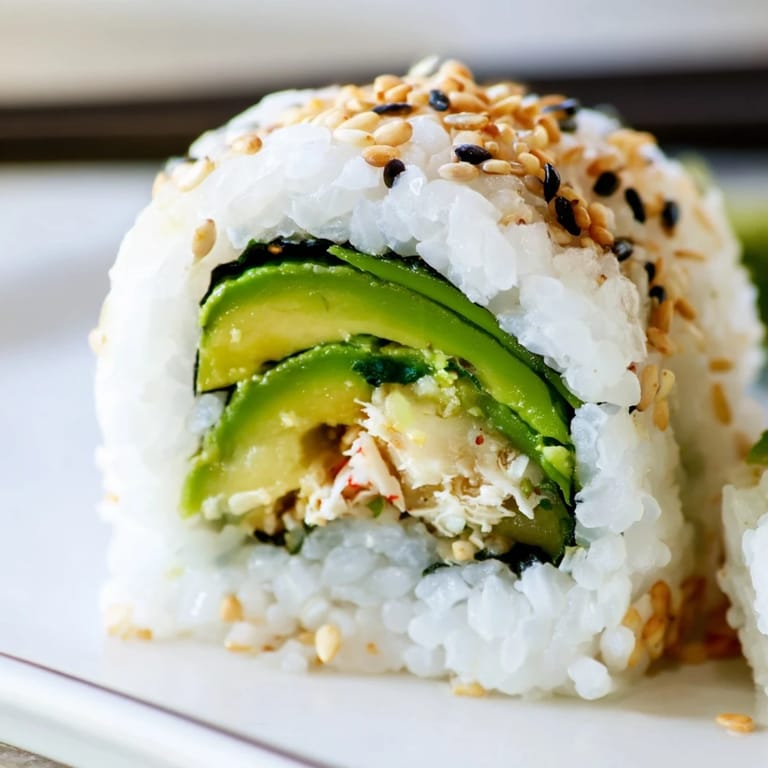 Pin it
 There is something deeply satisfying about plating a homemade sushi spread, the pieces arranged like edible jewels on a simple white plate. My partner now requests California rolls for special occasions, and every time I make them, I remember that first messy attempt and how far I have come.
Getting The Rice Right
The difference between good and great sushi almost always comes down to the rice. I have learned that rushing the cooling process results in gummy texture that refuses to cooperate during rolling. Spread your seasoned rice in a wide shallow container and fan it occasionally while it comes to room temperature.
Rolling Technique Mastery
Your first few rolls might look more like burritos than sushi, and that is completely normal. The key is applying even pressure with the mat while rolling, avoiding the temptation to squeeze too tightly which forces the fillings out the sides.
Customization Ideas
Once you have the basic technique down, the variations become endless and exciting. Try mixing Sriracha into your mayonnaise for a spicy kick that transforms the entire flavor profile.
- Swap imitation crab for real crab meat when you want to elevate the dish
- Add thin strips of mango for a sweet and savory tropical variation
- Experiment with different vegetables like julienned carrots or bell peppers
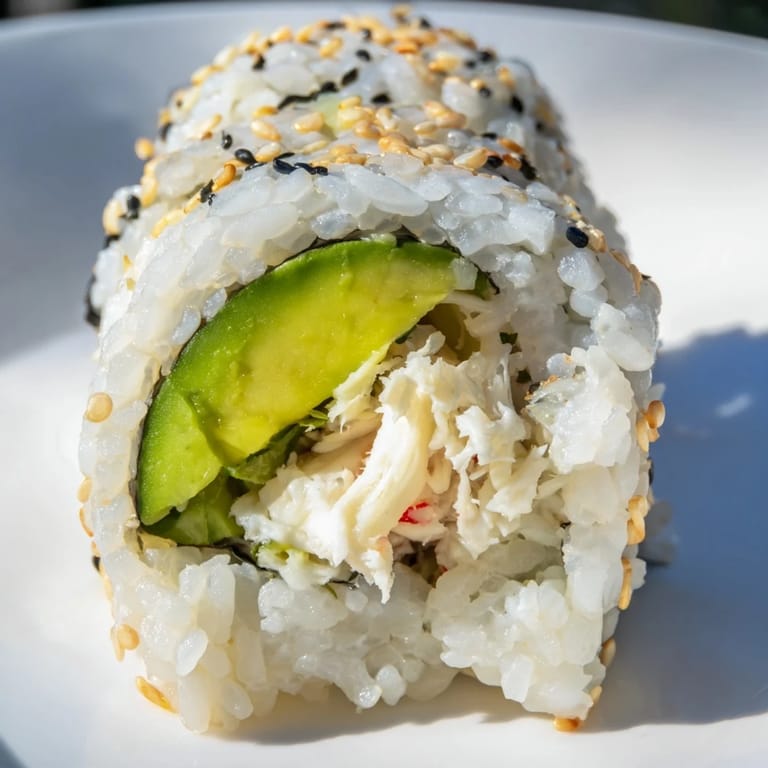 Pin it
 There is a quiet joy in sitting down to a platter of sushi you rolled yourself, each piece imperfect but made with your own hands. Pour some sake, arrange your ginger, and savor not just the flavors but the accomplishment.
Recipe FAQs
- → What makes this roll different from traditional maki?
This inside-out style reverses the traditional roll, placing rice on the exterior and nori on the interior. This technique, developed in Los Angeles during the 1960s, was designed to appeal to American diners who found seaweed intimidating. The rice exterior also provides an excellent surface for sesame seeds to adhere to.
- → Can I use real crab instead of imitation crab?
Absolutely. Fresh lump crab meat offers superior texture and flavor compared to surimi. However, imitation crab works beautifully and provides the authentic taste most people expect from this roll. If using real crab, ensure it's cooked thoroughly and picked free of shells.
- → Why is my rice falling apart when rolling?
Rice temperature and moisture content are crucial. The rice should be at room temperature—warm rice becomes too sticky, while cold rice won't adhere properly. Keep your hands moistened with water when handling, and don't spread the rice too thinly. Practice makes perfect with rolling technique.
- → How do I prevent the nori from becoming soggy?
Work quickly once the rice is prepared, and avoid over-moistening your hands. The plastic wrap on your bamboo mat also helps prevent sticking and moisture transfer. Assemble rolls just before serving for optimal texture. If preparing ahead, cover tightly with plastic wrap and refrigerate for up to 2 hours.
- → What's the trick to getting clean slices?
Use your sharpest knife and wet it with water or vinegar between each cut. A long, thin blade works best. Cut with a gentle sawing motion rather than pressing down. Letting the completed rolls rest for 5 minutes before slicing also helps them hold their shape better.
- → Can I make this vegetarian?
Replace the crab with additional avocado, cucumber strips, or seasoned tofu. Some creative variations include mango, bell pepper, or cooked shiitake mushrooms. The rolling technique remains exactly the same regardless of filling choice.