 Pin it
 There's something about chopping cabbage that slows everything down. Years ago, during a particularly hectic week, I found myself standing in my kitchen with half a head of green cabbage, some carrots, and absolutely no plan. What emerged was this soup—humble, honest, and somehow exactly what I needed. It became my go-to whenever life felt too full or my body needed gentle nourishment.
I made this soup for my neighbor last winter when she was recovering from surgery, and she called me three days later asking for the recipe. She'd had it for lunch every single day. There's something about feeding someone this kind of straightforward, nourishing food that feels like the most useful thing you can do.
Ingredients
- Green cabbage (1 small head, about 700 g): The foundation of this soup—its mild sweetness develops beautifully as it cooks, and it becomes silky without falling apart if you don't overcook it.
- Carrots (2 medium): They add natural sweetness and color, plus they hold their shape perfectly in the finished soup.
- Celery stalks (2): Often overlooked, but this is where the aromatic depth comes from—don't skip it.
- Onion (1 medium): Diced fine so it dissolves into the broth and creates a flavor base that tastes like you've been simmering this for hours.
- Garlic (3 cloves, minced): Add it after the softer vegetables so it doesn't burn and turn bitter in the hot oil.
- Red bell pepper (1): The brightness here cuts through the earthiness and makes each spoonful feel lighter.
- Diced tomatoes (400 g can): Use good quality canned ones—they're picked at peak ripeness and give you better flavor than fresh tomatoes out of season.
- Zucchini (1 small, optional): If you add it, it softens into the broth and thickens the soup naturally.
- Vegetable broth (1.5 liters): Low sodium lets you control the salt and taste what you're actually making.
- Olive oil (1 tablespoon): Just enough to coat the bottom of the pot and start releasing the flavors from your vegetables.
- Dried thyme and oregano (1 teaspoon each): These dried herbs are reliable here—fresh ones lose their edge during long cooking.
- Black pepper and salt: Taste as you go; different broths have different sodium levels.
- Chili flakes and lemon juice (optional): Keep these on the side and add them at the end if the soup feels like it needs waking up.
- Fresh parsley (for garnish): It adds a moment of freshness and makes people think you fussed more than you actually did.
Tired of Takeout? 🥡
Get 10 meals you can make faster than delivery arrives. Seriously.
One email. No spam. Unsubscribe anytime.
Instructions
- Build your aromatic base:
- Heat the olive oil in a large soup pot over medium heat, then add the onion, carrots, and celery. Sauté for about 5 minutes, stirring occasionally, until the onion turns translucent and the kitchen starts smelling like something good is happening.
- Wake up the garlic:
- Stir in the minced garlic and cook for just 1 minute until it becomes fragrant—you'll know because the smell shifts from raw to toasted. Don't let it sit longer or it'll taste sharp instead of sweet.
- Add the rest of the vegetables:
- Toss in the bell pepper, zucchini if you're using it, and the chopped cabbage. Sauté for another 3 to 4 minutes, stirring occasionally, until the cabbage softens just slightly and releases its own sweetness.
- Bring in the liquid and seasonings:
- Pour in the diced tomatoes and all their juice, then add the vegetable broth. Sprinkle in the thyme, oregano, black pepper, salt, and chili flakes if you want heat. Give everything a good stir so nothing settles at the bottom.
- Simmer gently:
- Bring the whole pot to a boil, then immediately reduce the heat to low and cover it. Let it simmer for 25 to 30 minutes until every vegetable is tender but not mushy—this is when the flavors really marry together.
- Taste and adjust:
- Fish out a spoon of broth and taste it carefully. Add more salt, pepper, or a squeeze of lemon juice if it needs brightness or depth. This step makes the difference between good soup and soup that tastes like you actually know what you're doing.
- Serve with intention:
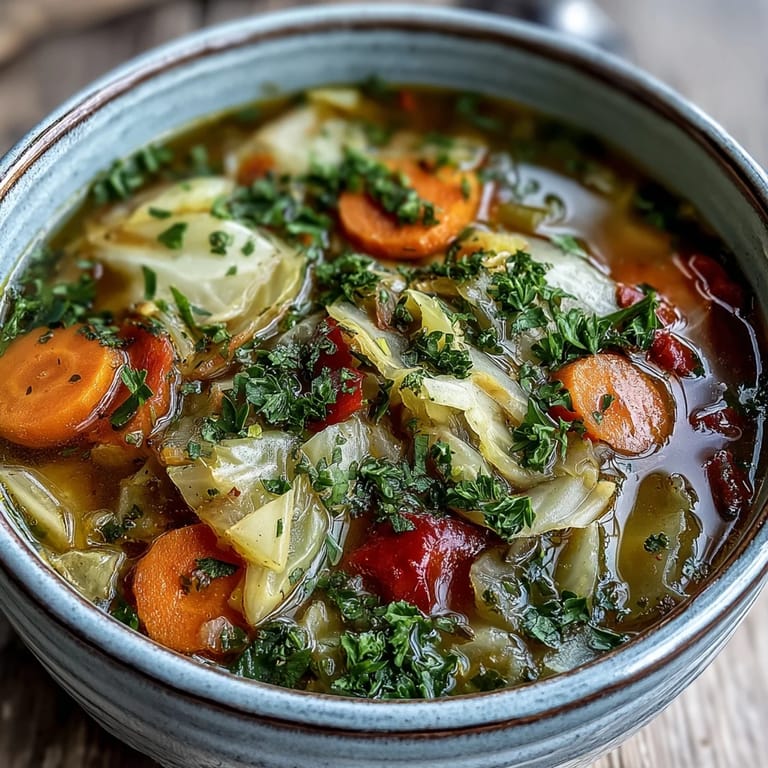
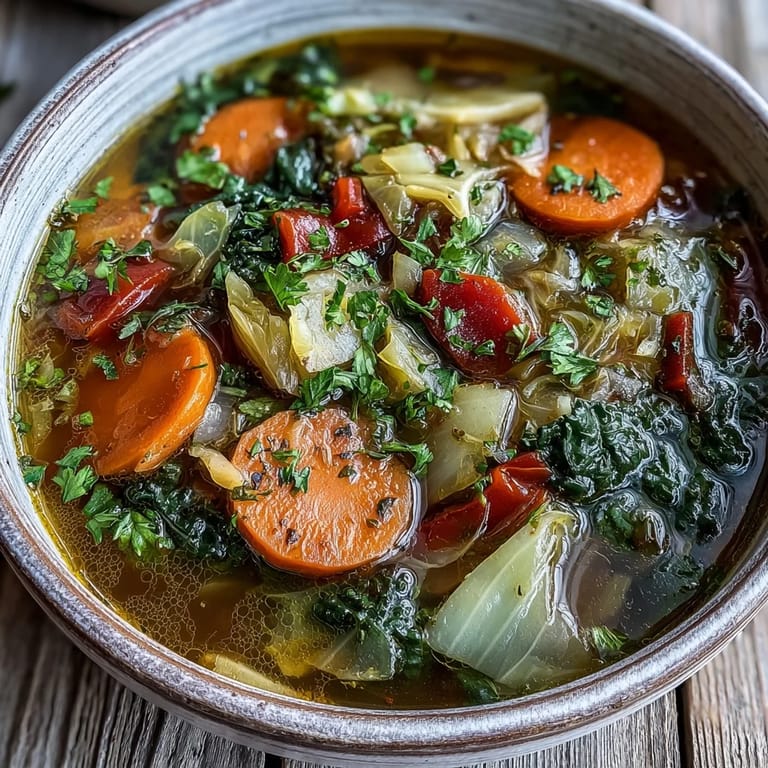
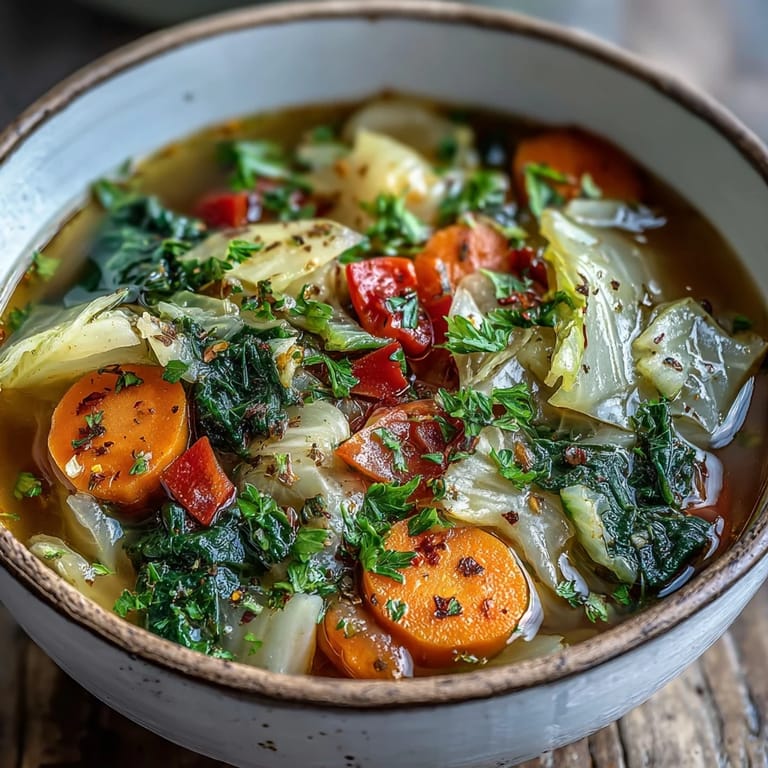
- Ladle it into bowls and scatter fresh parsley over the top. The green looks beautiful and tastes like a fresh finish to something warm.
 Pin it
 There was a morning last spring when I pulled a container of this soup out of my freezer, heated it, and realized I'd forgotten how restorative it actually was. I sat with it for twenty minutes before rushing off, and it set the entire day differently. That's when I understood that this recipe isn't really about the ingredients or the technique—it's about giving yourself permission to stop and eat something real.
Why This Soup Works Year-Round
Cabbage is one of the few vegetables that's genuinely good in every season, which means you can make this soup whenever you need it. In winter, it feels warming and grounding; in summer, when you let it cool slightly, it becomes refreshing. The beauty is that it doesn't demand peak-season produce or complicated timing—it just quietly does what it's supposed to do.
Making It Your Own
This recipe is a template more than a rulebook. I've made it with kale instead of cabbage on mornings when I felt like something earthier. I've added white beans when I wanted protein, or a splash of coconut milk when I wanted richness. Some people add a bay leaf or a strip of kombu for deeper broth flavor. The foundation is solid enough that you can play with it.
Storage and Making Ahead
This soup keeps beautifully in the refrigerator for up to four days, and honestly, it tastes better by day two because the flavors have time to settle and deepen. You can also freeze it in portions, which turns a quiet cooking afternoon into weeks of ready meals. Just leave a little headspace in your containers so it doesn't burst when it freezes.
- Reheat gently on the stovetop rather than blasting it in the microwave—it deserves that little bit of care.
- If it thickens too much after refrigerating, thin it with a splash of broth or water when you reheat it.
- Don't add the fresh parsley garnish until you're actually eating it, so it stays bright and crisp.
 Pin it
 This soup proves that the simplest dishes often become the most essential ones. Keep making it, keep sharing it, and let it become whatever your body and kitchen need it to be.
Recipe FAQs
- → Can I use red or Napa cabbage instead of green cabbage?
Yes, both red and Napa cabbage work wonderfully in this soup. Red cabbage will give a deeper color and slightly earthier flavor, while Napa cabbage offers a milder, more delicate taste and softer texture.
- → How can I make this soup more filling?
Add protein-rich ingredients like white beans, chickpeas, or lentils during the simmering stage. You can also serve with whole-grain bread, brown rice, or quinoa on the side for a heartier meal.
- → Can I freeze leftover cabbage soup?
Absolutely! This soup freezes beautifully for up to 3 months. Let it cool completely, then store in airtight containers or freezer bags. Thaw overnight in the refrigerator and reheat gently on the stovetop.
- → What other vegetables can I add to this soup?
Feel free to add mushrooms, green beans, spinach, kale, or diced potatoes. Root vegetables like turnips or parsnips also work well. Add heartier vegetables at the beginning and leafy greens in the last 5 minutes of cooking.
- → Why does my soup taste bland?
Make sure you're using a flavorful vegetable broth and don't skip the herbs and seasonings. Taste and adjust salt, pepper, and acidity throughout cooking. A squeeze of lemon juice at the end brightens all the flavors beautifully.
- → Is this soup suitable for meal prep?
Yes, this soup is ideal for meal prep! It stores well in the refrigerator for up to 4 days and the flavors actually deepen and improve overnight. Portion into individual containers for easy grab-and-go lunches throughout the week.