 Pin it
 The first time I had poke was at a tiny spot in Honolulu where the line wrapped around the building. I stood there for 45 minutes, watching locals carry out containers of glistening marinated fish, and when I finally took my first bite, completely understood the obsession. Back home, I spent months tweaking the marinade until it hit that same perfect balance of salty, sweet, and umami. Now my friends request these bowls every summer, and I've learned that the real secret isn't just the fish quality—it's letting those flavors mingle while you prep everything else.
Last July, I made these for a dinner party and set out all the components in separate bowls on the kitchen island. Within minutes, my guests had abandoned the dining table entirely, standing around the island building their own creations and chatting about toppings like we were at a build-your-own station. Someone brought a bottle of crisp white wine, another grabbed chopsticks from the drawer, and what was supposed to be a formal dinner turned into this casual, interactive feast that lasted for hours. That's when I realized poke bowls aren't just food—they're an experience.
Ingredients
- Sushi-grade salmon or tuna: This is non-negotiable since the fish isn't cooked. I've learned to ask my fishmonger what came in that morning rather than assuming everything behind the counter is sushi-ready
- Sesame oil: Toasted sesame oil adds this incredible nutty depth that regular oil just cannot replicate, and a little goes a long way
- Sushi rice: Short-grain rice creates that perfect sticky foundation that holds everything together. I once tried long-grain and the toppings just slid right off
- Rice vinegar: This seasons the rice while giving it that characteristic tang. I've experimented with other vinegars but nothing hits quite the same note
- Avocado: The creaminess here is crucial. Pick one that gives slightly when pressed but still feels firm enough to slice cleanly
- Cucumber and carrots: These provide this essential crunch that cuts through the rich fish and rice
- Spicy mayo: This ties everything together. I mix sriracha into good-quality mayo until it hits my spice tolerance
Tired of Takeout? 🥡
Get 10 meals you can make faster than delivery arrives. Seriously.
One email. No spam. Unsubscribe anytime.
Instructions
- Cook the rice to perfection:
- Rinse your sushi rice under cold water until it runs clear, about 3-4 minutes, which removes excess starch for that restaurant texture. Combine with water in a saucepan, bring to a boil, then cover tightly and simmer on the lowest heat setting for exactly 15 minutes. Remove from heat and let it steam, covered, for 10 minutes longer. Fold in the rice vinegar, sugar, and salt while the rice is still warm, then spread it in a thin layer on a baking sheet to cool slightly
- Marinate the fish:
- Whisk together soy sauce, sesame oil, rice vinegar, honey, grated ginger, and sesame seeds in a glass bowl. Add the diced fish and gently fold until every piece is coated. Refrigerate for 10-15 minutes, turning once halfway through, but no longer than 20 minutes or the acid will start to cook the fish
- Prep all your toppings:
- Slice your avocado, cucumber, carrots, radishes, and spring onions while the fish marinates. If using frozen edamame, cook according to package directions and shock in cold water to stop cooking
- Build your bowls:
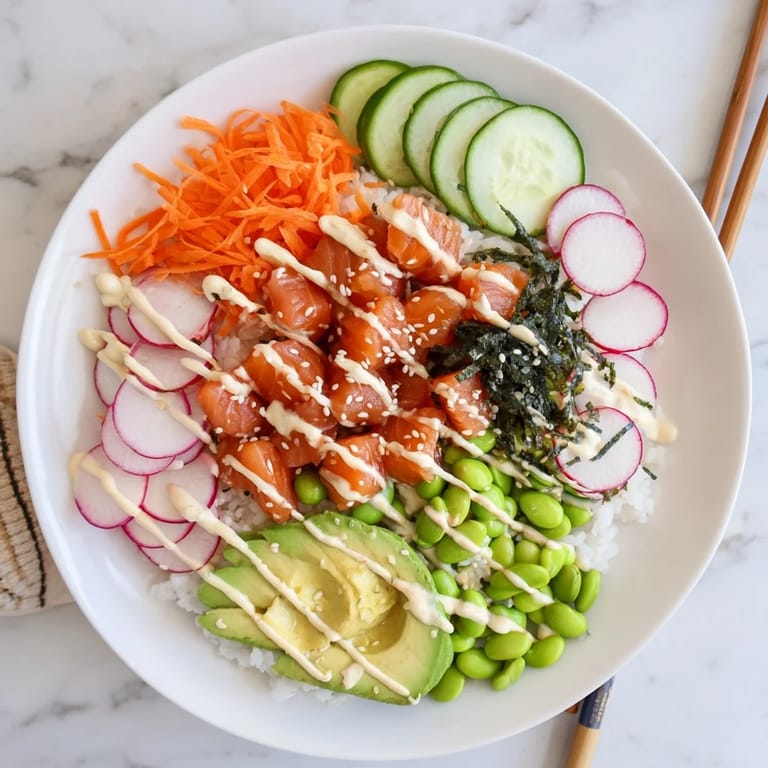
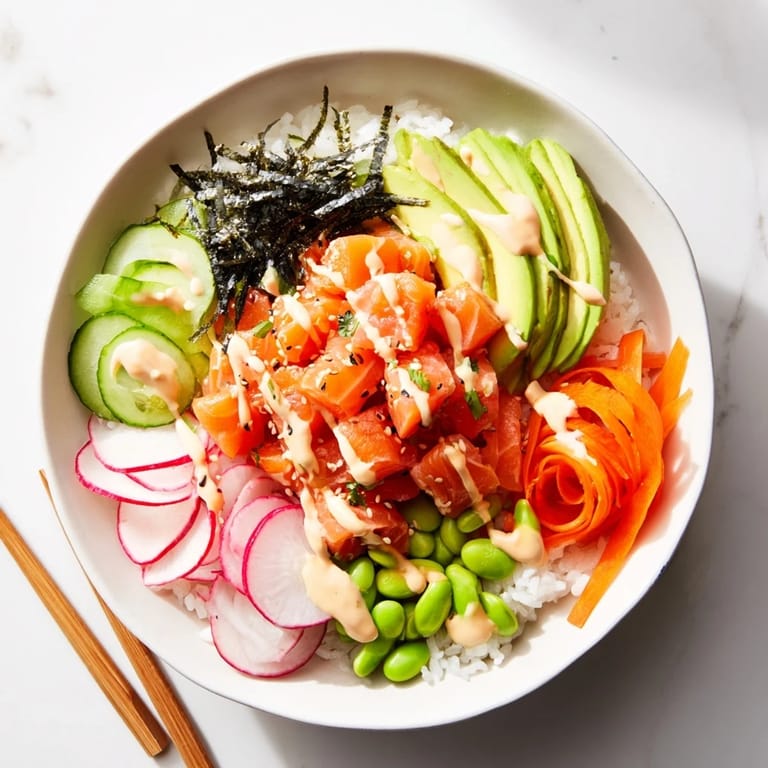
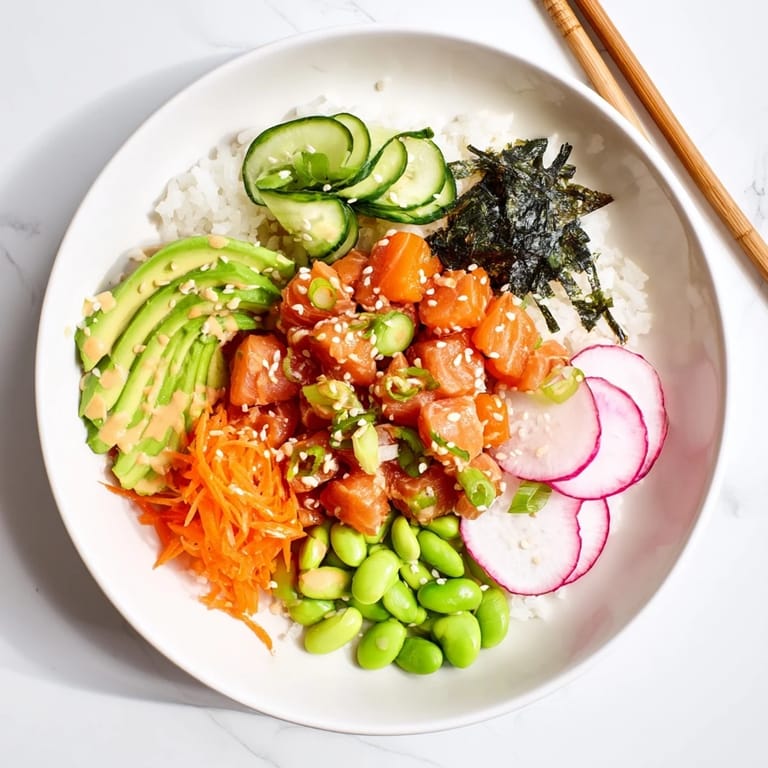
- Divide the cooled rice among four bowls, creating a slight well in the center. Arrange marinated fish, avocado, cucumber, carrots, edamame, radishes, and spring onions in sections around the rice like a clock face. Top with nori strips, toasted sesame seeds, and any microgreens you have on hand
- Finish with your sauces:
- Drizzle spicy mayo in a zigzag pattern across each bowl and add extra soy sauce as needed. Serve immediately with pickled ginger and lime wedges on the side for squeezing
 Pin it
 These bowls became my go-to for summer evenings when turning on the oven feels like a mistake. There's something about the cool, fresh ingredients and the DIY assembly that turns dinner into an event rather than just a meal.
Building a Beautiful Bowl
I've learned that arranging toppings in sections rather than piling them together makes each bite more interesting. When you can choose exactly which combination hits your spoon, the experience changes completely. Some people mix everything together immediately, others eat section by section, and both approaches are valid.
Making It Your Own
Mango and pineapple add this sweetness that plays beautifully against the salty fish, while pickled vegetables bring extra tang and crunch. Once I added some quick-pickled red onions and now they're a non-negotiable topping in our house. The beauty of poke bowls is how easily they adapt to whatever looks good at the market.
Wine and Drink Pairings
A crisp Sauvignon Blanc cuts through the richness of the fish and avocado, while an icy glass of unsweetened green tea provides this refreshing contrast that never overpowers the delicate flavors. On hot days, I've even served these with light Japanese beers and nobody complained.
- Chill your bowls in the freezer for 10 minutes before assembly for restaurant-style presentation
- Toast your sesame seeds in a dry pan for 2 minutes to deepen their flavor
- Keep extra spicy mayo handy because people always want more than expected
 Pin it
 There's something deeply satisfying about eating with your eyes first, then building each perfect bite exactly how you want it. That's the magic of poke bowls.
Recipe FAQs
- → What type of fish works best?
Sushi-grade salmon or tuna are traditional choices. The fish must be fresh and safe to eat raw. Look for specifically labeled sushi-grade fish from reputable markets.
- → Can I make this vegetarian?
Absolutely. Substitute the fish with marinated tofu or tempeh. Prepare the same marinade and let the tofu absorb flavors for at least 30 minutes before assembling.
- → How long does marinated fish last?
Marinate the fish for 10-15 minutes for optimal flavor and texture. Consume immediately after assembling. The fish should not sit in the marinade longer than 30 minutes.
- → What rice should I use?
Short-grain sushi rice is ideal for its sticky texture and ability to hold together. Arborio or other short-grain varieties work as substitutes.
- → Can I prepare components ahead?
Yes. Cook rice up to a day ahead and store refrigerated. Prep vegetables and mix sauces in advance. Assemble just before serving for the freshest experience.
- → What toppings can I add?
Mango, pineapple, seaweed salad, pickled vegetables, or microgreens make excellent additions. Customize based on seasonal availability and personal preference.