 Pin it
 My kitchen counter was dusted white with flour, my fingers sticky with egg, and I was wondering if I'd bitten off more than I could chew. Making ravioli from scratch wasn't something I'd planned, it just happened one Saturday when I had too much ricotta and a craving I couldn't ignore. The dough came together slowly, stubbornly at first, then suddenly turned silky under my palms. By the time I pulled the first batch from the pot, watching them bob to the surface like little pillows, I understood why people fall in love with homemade pasta.
I made this for my sister's birthday once, and she sat at the table watching me plate each ravioli like it was a tiny work of art. She said it tasted like comfort, which is exactly what I was hoping for. We ate slowly, talking about nothing important, and the marinara sauce left a little red smudge on the rim of her wine glass. That night, the recipe stopped being just instructions and became something I'd make again and again for the people I wanted to feed well.
Ingredients
- All purpose flour: The backbone of your dough, it should be measured loosely and not packed, or your pasta will turn out tough and hard to roll.
- Eggs: Use the freshest you can find because they bind the dough and give it that golden color that makes fresh pasta unmistakable.
- Ricotta cheese: The creamier the better, and if it looks watery, drain it in a cheesecloth for 20 minutes or your filling will weep.
- Fresh spinach: Wilt it down and squeeze it dry with your hands, really dry, or you'll end up with soggy ravioli that fall apart in the pot.
- Parmesan cheese: Grate it yourself from a block because the pre shredded stuff has stabilizers that change the texture of the filling.
- Nutmeg: Just a whisper of it brings warmth and depth without announcing itself, like a secret ingredient no one can quite name.
- Marinara sauce: Homemade is lovely, but a good jar works too, just simmer it with garlic and olive oil to make it your own.
- Garlic: Mince it fine and don't let it brown, burnt garlic turns bitter and will haunt your sauce.
- Fresh basil: Tear it with your hands right before serving so it releases that grassy, sweet fragrance over the hot ravioli.
Tired of Takeout? 🥡
Get 10 meals you can make faster than delivery arrives. Seriously.
One email. No spam. Unsubscribe anytime.
Instructions
- Make the Pasta Dough:
- Pile your flour on the counter, create a well in the center, and crack the eggs into it like you're building a tiny volcano. Use a fork to whisk the eggs and slowly pull in the flour until it's shaggy, then knead it with your hands until it's smooth and springs back when you poke it.
- Prepare the Filling:
- Wilt the spinach in a hot pan, let it cool, then squeeze out every drop of water you can, it should feel almost dry. Mix it with the ricotta, Parmesan, egg yolk, nutmeg, salt, and pepper until it's creamy and flecked with green.
- Roll the Pasta:
- Divide your rested dough in half and keep one piece covered so it doesn't dry out. Roll the other piece thin, really thin, until you can almost see your hand through it, then lay it gently on a floured surface.
- Shape the Ravioli:
- Drop small mounds of filling onto one sheet of pasta, spacing them about two inches apart, then brush water around each mound. Lay the second sheet on top, press out air pockets with your fingers, and cut into squares, sealing the edges with a fork so they don't burst open.
- Cook the Ravioli:
- Bring a big pot of salted water to a gentle boil, not a rolling one, and slip the ravioli in carefully. They'll sink, then float to the top in three or four minutes, and that's when you know they're ready to scoop out.
- Make the Marinara Sauce:
- Heat olive oil in a pan, add minced garlic, and let it sizzle until it smells sweet and toasted. Pour in the marinara, season it with salt and pepper, and let it simmer while the ravioli cook so the flavors meld together.
- Serve:
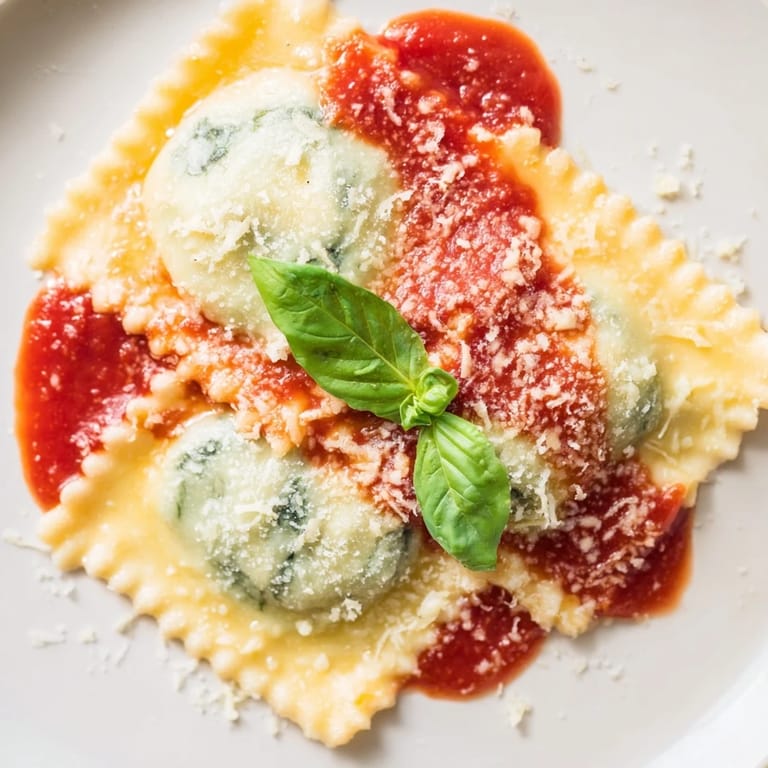
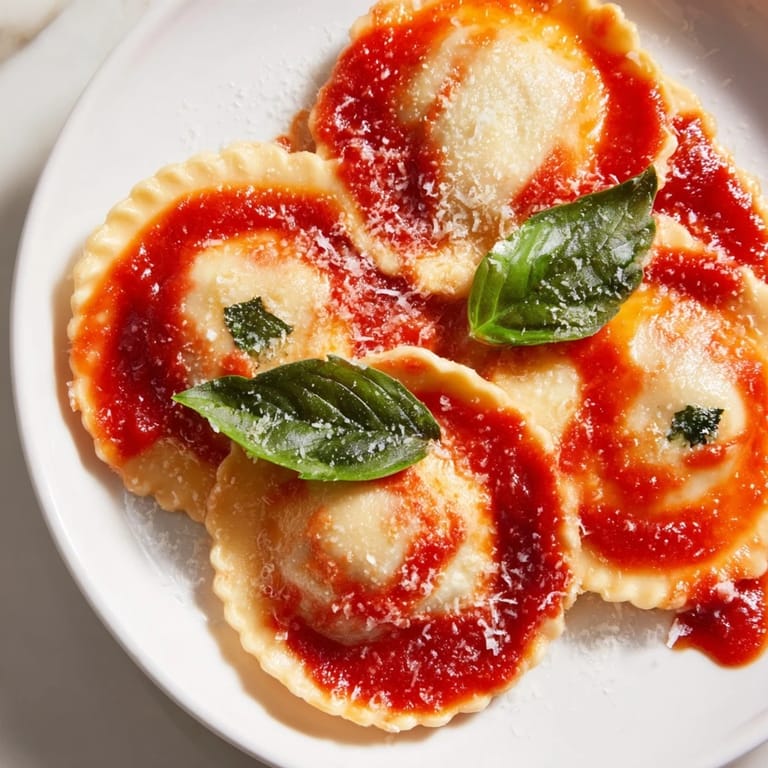
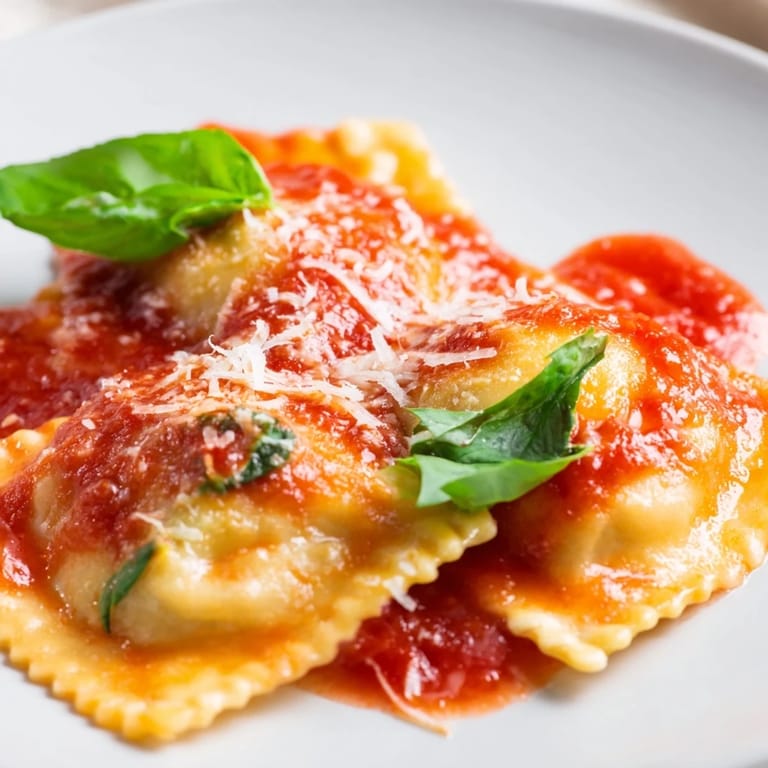
- Spoon a puddle of sauce onto each plate, nestle the ravioli on top, and finish with more sauce, torn basil, and a generous shower of Parmesan. Serve it hot and watch people slow down to savor every bite.
 Pin it
 There was a Sunday afternoon when I taught my neighbor how to make these, and we stood side by side at the counter, flour everywhere, laughing every time a ravioli came out lopsided. She said she'd never made pasta before and didn't think she could, but by the end, she was sealing edges like she'd done it a hundred times. We ate them together with too much Parmesan and a bottle of cold white wine, and she texted me later that night to say it was the best thing she'd cooked all year.
How to Store and Reheat
If you're making these ahead, lay the uncooked ravioli on a floured baking sheet and freeze them until solid, then transfer to a bag so they don't stick together. You can cook them straight from frozen, just add an extra minute or two to the boiling time. Leftover cooked ravioli can be stored in the fridge for up to two days, and I like to reheat them gently in a pan with a little butter and sage instead of boiling them again.
What to Serve Alongside
A simple arugula salad with lemon and olive oil cuts through the richness of the ricotta and makes the meal feel complete without overwhelming it. Garlic bread is always welcome, especially if you have extra marinara for dipping. A crisp Pinot Grigio or Vermentino is perfect here, something light and bright that doesn't compete with the tomato and cheese.
Common Questions and Quick Fixes
If your pasta dough feels tough and won't roll thin, let it rest longer, gluten needs time to relax or it'll fight you every step of the way. You can swap frozen spinach for fresh, just make sure you thaw it completely and wring it out in a clean kitchen towel until your arms hurt. Some people ask if you can bake ravioli instead of boiling them, and the answer is yes, but brush them with olive oil and cover with sauce and cheese or they'll dry out in the oven.
- Add a pinch of lemon zest to the filling for a subtle brightness that makes the ricotta sing.
- Use a ravioli cutter or a fluted pastry wheel for prettier edges that crimp and seal at the same time.
- Don't skip the resting time for the dough, it's the difference between pasta that's easy to work with and pasta that tears.
 Pin it
 This recipe has become one of those dishes I make when I want to slow down and remember why I love cooking in the first place. There's something about the rhythm of rolling, filling, and sealing that feels almost like a conversation between you and the ingredients, and the reward at the end is a plate of pasta that tastes like care.
Recipe FAQs
- → Can I make ravioli ahead of time?
Yes, you can freeze unbaked ravioli for up to 3 months. Place them on a baking sheet to freeze individually before transferring to freezer bags. Cook directly from frozen, adding 1-2 extra minutes to the cooking time.
- → What's the best way to seal ravioli edges?
Brush the pasta edges with water before pressing the top sheet down. Use a fork to press and crimp the edges firmly around each filling mound. This creates a tight seal and prevents the filling from leaking during cooking.
- → How do I know when ravioli is cooked properly?
Ravioli is done when it floats to the surface of boiling water and stays there for about 1 minute. If you prefer them slightly firmer, wait another minute. They should be tender but still hold their shape.
- → Can I use frozen spinach instead of fresh?
Absolutely. Use frozen spinach that's been thawed and thoroughly squeezed dry to remove excess moisture. This prevents the filling from becoming watery and ensures the best texture in your ravioli.
- → What wine pairs well with this dish?
A crisp white wine like Pinot Grigio complements the creamy filling and tomato sauce beautifully. The acidity cuts through the richness and enhances the fresh basil flavors.
- → Can I make the pasta dough by hand?
Yes, the traditional method involves creating a flour well on your work surface, adding eggs, and gradually incorporating flour with a fork. This requires patience and practice but produces excellent results.