 Pin it
 One quiet Tuesday evening, my neighbor dropped off a container of homemade vegetable broth, and I stood there wondering what to do with it before it went bad. That's when I remembered a soup my colleague had brought to work months before—light, delicate, and somehow both simple and sophisticated. I decided to wing it, combining what I had on hand with silken tofu from the corner market, and the result was so naturally comforting that I've been making it ever since. There's something almost meditative about how quickly it comes together, and how a humble pot of broth transforms into something that feels like a gentle hug.
I made this soup for my sister during a particularly gray January, when she was recovering from the flu and couldn't stomach anything heavy. She had it twice a day for three days straight, and by the end she was actually asking for seconds instead of just politely finishing the bowl. That's when I realized this isn't just soup—it's the kind of dish that actually nourishes you when you need it most.
Ingredients
- Low-sodium vegetable broth (1.5 liters): This is your foundation, so use something you'd actually want to drink on its own—it carries the entire flavor profile, and skimping here makes a real difference.
- Soy sauce or tamari (2 tablespoons): Go with tamari if gluten matters to you, and taste as you go because different brands have wildly different salt levels.
- Fresh ginger (1 tablespoon, thinly sliced): Don't grate it—slicing lets you remove pieces easily if you want to adjust the intensity, and the thin coins look prettier in the bowl.
- Garlic (2 cloves, minced): Mince it finely so it dissolves into the broth rather than sitting there as visible chunks.
- Sesame oil (1 teaspoon): This small amount is enough to wake up the whole pot—use a good quality one because you can taste it clearly.
- Carrot (1 medium, julienned): Julienning takes a minute longer than slicing, but the thin matchsticks cook evenly and look elegant floating in your bowl.
- Shiitake mushrooms (100 g, sliced): Their earthy, almost meaty flavor is what makes this soup feel substantial rather than light and empty.
- Baby bok choy (100 g, chopped): The tender leaves soften instantly, and the stems stay just crisp enough to add texture.
- Red bell pepper (1 small, thinly sliced): The sweetness balances the umami from the mushrooms and soy, and it adds a pop of color that makes the soup look alive.
- Spring onions (2, sliced): Save most of these for finishing the bowl—they're fresher and brighter when they're just wilted, not cooked through.
- Silken tofu (300 g, cubed): The silken variety is crucial here because it's delicate enough to almost melt on your tongue, unlike firmer types that would feel heavy in a broth.
- Fresh cilantro (optional): A small handful makes it feel intentional rather than just soup in a bowl.
- Toasted sesame seeds (optional): These add a quiet nuttiness and that satisfying little crunch.
- Lime wedges (optional): A squeeze at the end brightens everything and wakes up your palate.
Tired of Takeout? 🥡
Get 10 meals you can make faster than delivery arrives. Seriously.
One email. No spam. Unsubscribe anytime.
Instructions
- Heat the aromatics:
- Warm the sesame oil in your large pot over medium heat until it shimmers slightly, then add the minced garlic and sliced ginger. You'll know they're ready when the kitchen smells distinctly gingery and fragrant—usually about 1-2 minutes—and that's your signal that the flavors are waking up.
- Build the broth base:
- Pour in your vegetable broth and soy sauce, then bring it to a gentle simmer rather than a rolling boil. You want a soft, quiet bubbling that lets the flavors meld without aggressively cooking off any of the delicate notes.
- Add the heartier vegetables:
- Drop in the carrot, shiitake mushrooms, and red bell pepper, then let them simmer for about 5 minutes. They should still have a little resistance when you taste them, not soft and mushy.
- Finish the vegetables:
- Add the chopped bok choy and most of the spring onions (save a few slices for garnish), cooking for another 2-3 minutes until they're just tender but still bright green. The bok choy wilts almost instantly, so don't leave it in too long.
- Introduce the tofu gently:
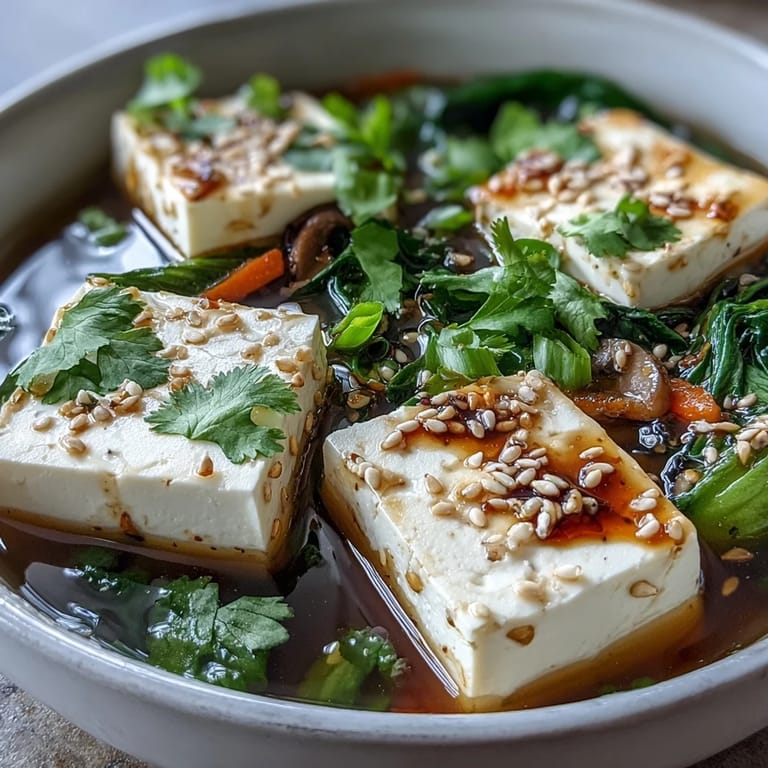
- This is where patience matters—carefully nestle the silken tofu cubes into the hot broth and let them warm through for about 2 minutes without stirring aggressively. Think of it as letting them float and find their place rather than pushing them around.
- Taste and adjust:
- This is your moment to decide if the soup needs another splash of soy sauce, a pinch more ginger, or anything else that calls to you. Trust your palate here because every broth is slightly different.
- Serve with intention:
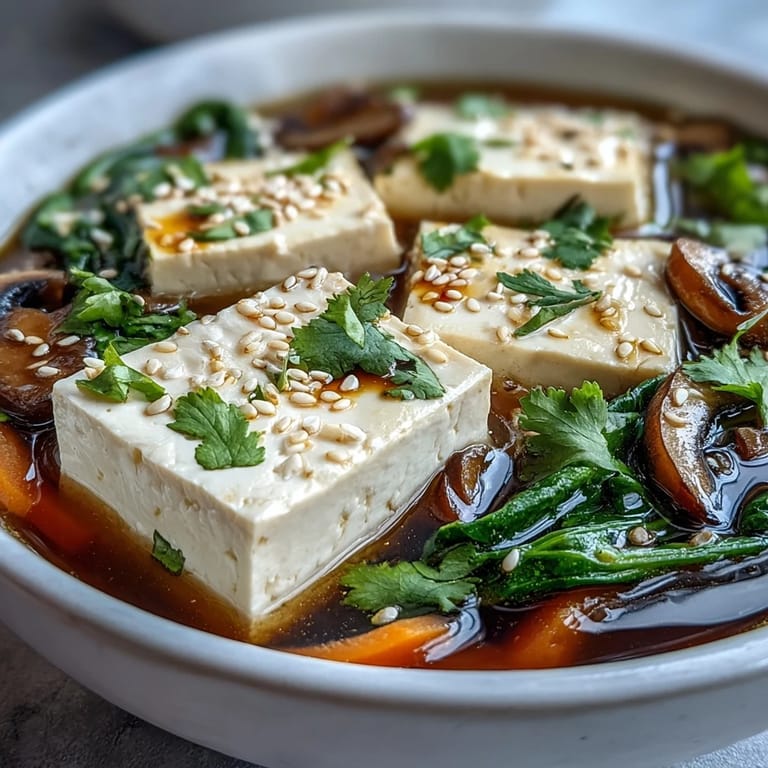
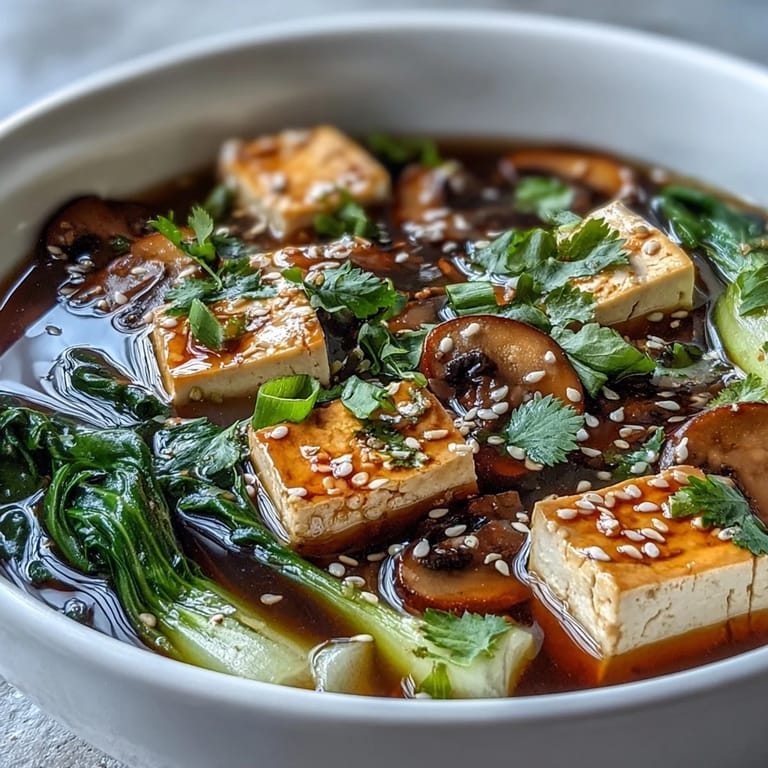
- Ladle the soup into bowls, making sure each one gets a good mix of broth and vegetables and at least one or two tofu cubes. Add cilantro, sesame seeds, and a squeeze of lime if you have them, then serve while everything is still steaming.
 Pin it
 There's a moment I always notice while eating this soup when everything else fades away—the warmth of the bowl in your hands, the way the steam carries all those subtle flavors upward, the gentle pop of tofu on your tongue. That's the magic of it, really.
Variations That Actually Work
I've experimented with nearly every vegetable combination possible, and the soup stays balanced as long as you honor the basic ratio of broth to solids. Snow peas are wonderful if you want something with more snap, napa cabbage absorbs the broth beautifully, and enoki mushrooms add an almost delicate, feathery texture that's quite different from shiitakes. The beauty is that you can look at what's in your crisper drawer and feel confident about adapting this—it's forgiving that way.
When You Want Heat
A spicy version emerged one night when I was feeling restless and added a generous drizzle of chili oil right before serving, and now that's become my go-to on mornings when I'm slightly under the weather but need something with character. Fresh sliced chili stirred in during the last minute also works beautifully, giving you little hot bursts between spoonfuls of silken tofu. The key is adding the heat at the end so it stays bright and punchy rather than mellowing into the broth.
Simple Things That Make All the Difference
The smallest adjustments transform how this soup feels—toasting your own sesame seeds changes their flavor entirely, using fresh lime instead of bottled shifts the brightness, and spending an extra minute on knife work to cut vegetables consistently means they cook evenly instead of some pieces finishing while others lag behind. These aren't complicated techniques, just small acts of attention that accumulate.
- Make your vegetable broth count because it's really the star, so choose something you'd actually enjoy on its own.
- Keep the heat moderate throughout so nothing becomes bitter or over-extracted, and you preserve all the delicate flavors.
- Taste as you go instead of trusting the measurements completely, because every stove and broth brand behaves slightly differently.
 Pin it
 This soup has become my quiet answer to the question of what to cook when I want something nourishing without thinking too hard. It's the kind of dish that doesn't ask for much but gives back generously.
Recipe FAQs
- → Can I use firm tofu instead of silken tofu?
Yes, firm tofu works well and provides more texture. It holds its shape better during simmering and creates a heartier bowl with a chewier bite. Simply press and cube the firm tofu before adding it to the broth during the last few minutes of cooking.
- → How long does this keep in the refrigerator?
The soup stores well for 3-4 days in an airtight container. However, the silken tofu may become softer and the vegetables more tender upon reheating. For best texture, consider storing the broth and vegetables separately from the tofu, then combine when reheating.
- → What vegetables can I substitute?
Snow peas, napa cabbage, enoki mushrooms, spinach, or sliced zucchini work beautifully. The base vegetables provide texture and color, so feel free to use whatever fresh produce you have available while maintaining roughly similar quantities.
- → Can I make this spicy?
Absolutely. Stir in chili oil, sliced fresh chili peppers, or red pepper flakes during the final minutes of simmering. Sriracha or chili garlic paste also work well as added heat sources. Adjust the spice level to your preference.
- → Is this suitable for meal prep?
Yes, this is excellent for meal prep. The flavors actually develop and improve overnight. Make a batch on Sunday and portion into containers for easy lunches throughout the week. Just reheat gently on the stove or in the microwave.
- → Can I freeze this soup?
The broth freezes well for up to 3 months, but the silken tofu texture may change after freezing and thawing, becoming slightly grainy. For best results, freeze the broth and vegetables without the tofu, then add fresh tofu when reheating.