 Pin it
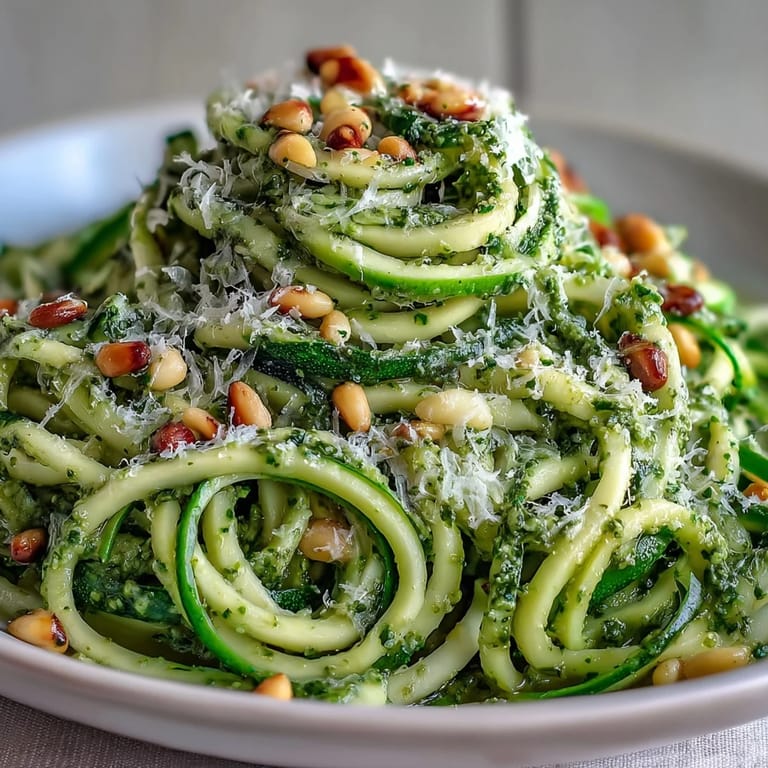
 My spiralizer sat unused for months until a friend mentioned she'd been craving pasta but wanted to feel lighter afterward. That comment stuck with me, and I found myself pulling out the tool on a Thursday evening when the basil in my garden had gotten almost aggressively green. Twenty minutes later, I was twirling zucchini noodles around my fork, and the pesto hit differently than I expected—brighter, fresher, like I'd captured summer in a bowl. It wasn't trying to be pasta; it was something entirely its own.
I made this for my mom one Sunday when she was visiting, and she actually paused mid-bite to ask what I'd done differently than usual. When I explained the zucchini noodles, she looked skeptical until she tasted the pesto—then she asked for the recipe, which felt like the highest compliment. We ended up talking through the whole meal about how food doesn't have to be complicated to feel special.
Ingredients
- Medium zucchinis, spiralized (2): Choose ones that are firm and not too watery; older zucchini can release excess moisture and make your noodles soggy.
- Olive oil (1 tablespoon for noodles, 1/4 cup for pesto): The extra-virgin version in the pesto matters most—it carries the flavor, while regular oil works fine for sautéing.
- Salt (pinch for noodles, to taste for pesto): Don't skip seasoning the zucchini itself; it draws out subtle flavor you'd otherwise miss.
- Fresh basil leaves, packed (1 cup): Tear them gently by hand after measuring to avoid bruising, which darkens the pesto.
- Grated Parmesan cheese (1/4 cup): Freshly grated tastes infinitely better than pre-shredded, and it melts into the pesto more smoothly.
- Pine nuts or walnuts (1/4 cup): Toast them lightly in a dry pan first if you have time; it deepens their flavor without any extra effort.
- Garlic clove (1): One is enough—add more only if you're brave or it's a garlic kind of day.
- Lemon juice (1 tablespoon): Freshly squeezed, never bottled; it keeps the pesto tasting bright and alive.
- Black pepper (to taste): Adds a gentle bite that balances the richness of the cheese and nuts.
- Extra Parmesan, fresh basil leaves, and red pepper flakes (for garnish): These final touches turn a good dish into something you'll photograph without thinking.
Tired of Takeout? 🥡
Get 10 meals you can make faster than delivery arrives. Seriously.
One email. No spam. Unsubscribe anytime.
Instructions
- Build the pesto foundation:
- Add basil, Parmesan, pine nuts, and garlic to your food processor and pulse until everything is finely chopped but not yet a paste. You want to see the texture shift as the oils from the nuts start releasing.
- Emulsify with oil and lemon:
- Turn the processor on and drizzle in the olive oil slowly—this is the magic step where it goes from crumbly to silky. Follow with lemon juice and pulse until smooth, then taste and adjust seasoning.
- Prepare your noodles:
- Spiralize the zucchinis into noodles, and if they're particularly wet, gently pat them with a paper towel; you want them ready to go straight into the pan.
- Sauté gently:
- Heat olive oil in a large skillet over medium heat, add the zucchini noodles with just a pinch of salt, and sauté for two to three minutes until tender but still with a slight bite. The moment they start to soften is when you pull them off the heat.
- Toss and taste:
- Remove from heat and toss the noodles with about half the pesto, then taste and add more if you'd like; pesto is personal, and you might want it lighter or more herbaceous. Some people prefer just a coating, others want it luxurious and thick.
- Plate and garnish:
- Divide between two plates and top with extra Parmesan, fresh basil leaves, and a sprinkle of red pepper flakes if you want a little heat. Serve immediately while the noodles still have their texture.
 Pin it
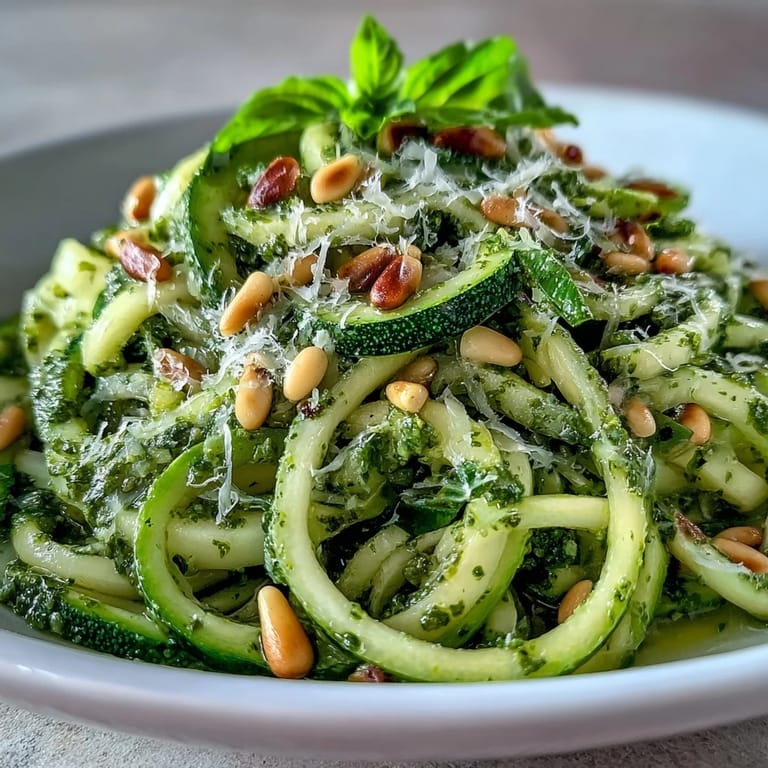
 There's a moment, right when you're tossing the pesto into those warm noodles, where you realize how satisfying this meal is going to be. It's the kind of dish that makes you feel good while you're eating it, not afterward—no heaviness, no regret, just pure flavor.
When Your Garden Is Overflowing
If you find yourself with more basil than you know what to do with, this is the answer. I once froze a batch of pesto in ice cube trays, then popped them into bags, and had instant flavor ready for weeks. It's not quite the same as fresh, but it's remarkably close and saves those moments when everything is at peak ripeness.
Pesto Beyond the Obvious
After making this a few times, I started thinking about pesto differently. It's not just for zucchini—it's a canvas. I've added it to roasted vegetables, stirred it into yogurt for a dip, and spread it on the side of a grilled cheese. The technique stays the same; the application expands infinitely if you let it.
Making It Your Own
The beauty of this dish is that it welcomes interpretation. Add grilled chicken if you want protein, toss in cherry tomatoes at the last second for burst of sweetness, or use sunflower seeds instead of pine nuts if you're avoiding tree nuts. I've even made it vegan by swapping nutritional yeast for Parmesan, and it holds its own beautifully.
- Serve this immediately after tossing to preserve the zucchini's texture and avoid wateriness.
- Taste your pesto before adding it all to the noodles; you might prefer a lighter hand or a bolder flavor.
- Keep extra pesto in the fridge for up to three days, or freeze it for longer storage.
 Pin it
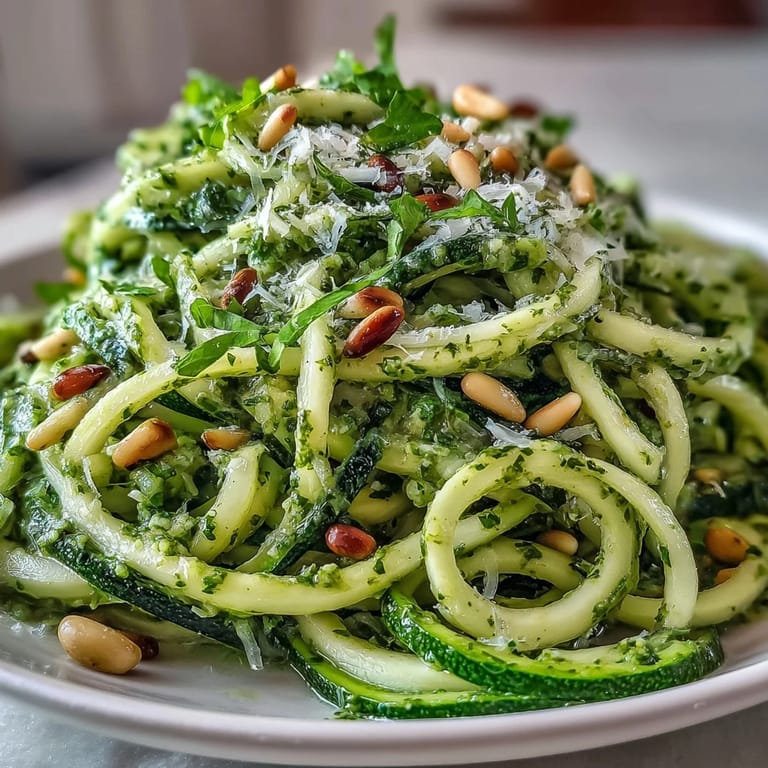
 This meal proves that healthy eating doesn't mean deprivation; it means choosing ingredients that make you happy. Twenty minutes from now, you'll understand why this became a regular in my kitchen.
Recipe FAQs
- → How do I prevent zucchini noodles from becoming watery?
Sauté the noodles briefly for just 2-3 minutes until tender-crisp. Avoid overcooking as zucchini releases water when heated too long. Serve immediately after tossing with pesto for the best texture.
- → Can I make the pesto ahead of time?
Yes, prepare the pesto up to 3 days in advance and store in an airtight container in the refrigerator. Press a piece of plastic wrap directly onto the surface to prevent oxidation and maintain vibrant green color.
- → What can I substitute for pine nuts?
Walnuts work beautifully as a more budget-friendly alternative. For nut allergies, swap in sunflower seeds or pumpkin seeds for similar texture and richness. Toast the nuts first for enhanced flavor.
- → Is this dish freezer-friendly?
Freezing is not recommended as the zucchini texture changes dramatically when thawed. The pesto portion can be frozen separately in ice cube trays for up to 3 months, then thawed for quick use.
- → How can I add more protein to this dish?
Top with grilled chicken breast, pan-seared shrimp, or white beans. For vegetarian options, add chickpeas or hemp seeds directly to the pesto for a protein boost without altering the flavors.